SEATTLE, Washington – Few people throughout the Pacific Northwest expected events to unravel this quickly.
Just hours earlier, optimism remained high that months of difficult negotiations would finally produce a breakthrough agreement.
Late night meetings reportedly continued well past midnight as both sides worked to resolve their remaining differences.
Many fans believed the project represented the foundation of the Seahawks' future for the next generation.
Instead, Friday morning brought one of the most disappointing developments Seattle sports fans have experienced in years.
Rumors began spreading before sunrise as information from confidential discussions slowly surfaced.
At first, very few people understood exactly why negotiations had suddenly reached a breaking point.
However, as additional details emerged, the magnitude of the dispute became increasingly clear.
According to multiple sources familiar with the negotiations, the center of the conflict was the proposed $4.7 billion Lumen Field renovation project.
The redevelopment had been widely viewed as a transformational investment in both the Seahawks and the city of Seattle.
The organization reportedly committed more than $3 billion in private funding toward the overall modernization effort.
Team officials were also prepared to absorb substantial long term operational and maintenance expenses.
However, the Seahawks continued seeking several infrastructure commitments they believed were critical to the project's success.
Reports indicated the organization requested approximately $1 billion for transportation improvements surrounding the stadium district.
Another $500 million was reportedly designated for utility modernization, public access projects, and infrastructure supporting future international events.
A separate economic development package valued at nearly $550 million over fifteen years was also included in final negotiations.
Supporters of the project argued these requests were intended to maximize long term economic returns rather than transfer costs to taxpayers.
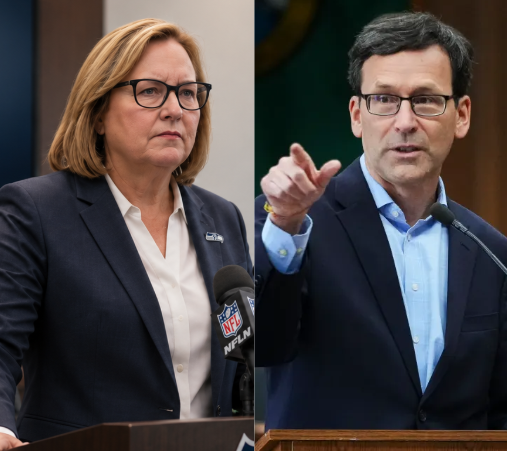
Governor Bob Ferguson, however, reportedly rejected much of the proposal because of concerns regarding future public obligations.
Economic advisors allegedly warned that total state commitments could eventually exceed $1.9 billion over the coming years.
By Friday morning, negotiations reportedly collapsed completely, leaving the future of the project in serious doubt.
What happened next sent shockwaves throughout the NFL and the entire Seattle sports community.
According to sources close to the franchise, Jody Allen immediately ordered an evaluation of contingency plans in Oregon.
Those discussions reportedly included a new team headquarters, advanced player development facilities, and a state of the art performance center.
The possibility instantly fueled fears that Seattle could gradually lose a significant portion of the franchise's long term operations.
During a final meeting with senior advisors, Allen reportedly defended the Seahawks' position with a powerful statement.
"We have tried to compromise at every level. But if the future of this organization continues to be placed in uncertainty, we have a responsibility to pursue another path to protect the Seahawks."
The statement quickly resonated with a large portion of the Seahawks fan base.
Many supporters believe the organization exhausted every reasonable effort to keep the project moving before negotiations collapsed.
While no final relocation decision has been announced, disappointment continues to spread throughout the region as a development once projected to create more than 27,000 jobs, generate nearly $4.8 billion in long term economic activity, and secure future Super Bowls and international events now faces the possibility of remaining stalled indefinitely.